Cody Cofer | August 4, 2026 | Criminal Defense

If you’ve been arrested or charged with a crime in Texas, understanding the Texas criminal court process can help you prepare for what comes next. While every case is different, most follow the same general path from arrest through resolution.
Knowing what to expect at each stage can help you make informed decisions and better protect your rights throughout the criminal justice process.
Arrest and Booking
The criminal court process typically begins with an arrest. Law enforcement may arrest someone based on a warrant or if officers have probable cause to believe a crime has been committed.
After an arrest, the individual is taken to jail for booking. During this process, law enforcement generally:
- Records personal information
- Takes fingerprints and photographs
- Documents the alleged offense
- Conducts a search of the individual and their property
After booking, the individual may remain in custody until bond is set or they are otherwise released.
Initial Court Appearance and Bond
After an arrest, the accused is generally brought before a magistrate judge. During this hearing, the court explains the charges, advises the accused of their constitutional rights, and determines whether to set bond.
The court may consider several factors when determining bond, including:
- The nature of the alleged offense
- The defendant’s criminal history
- Whether the defendant poses a flight risk
- Whether the defendant presents a danger to the community
Depending on the circumstances, the court may release the defendant on bond while the case is pending.
Arraignment
At the arraignment, the defendant is formally informed of the criminal charges and has the opportunity to enter a plea.
The available pleas generally include:
- Guilty
- Not guilty
- No contest (nolo contendere), when permitted
If the defendant pleads not guilty, the case will typically move into the pretrial phase.
Pretrial Proceedings
Many criminal cases are resolved before trial. During the pretrial stage, both sides exchange information, investigate the facts, file legal motions, and discuss whether the case can be resolved without a trial.
This stage may include:
- Discovery and review of the evidence
- Hearings on legal motions
- Plea negotiations
- Additional court appearances
The length of the pretrial process depends on the complexity of the case and the issues involved.
Trial
If the case cannot be resolved through a plea agreement or dismissal, it may proceed to trial. Depending on the circumstances, the defendant may have the right to a jury trial.
A criminal trial generally includes:
- Jury selection
- Opening statements
- Presentation of evidence and witness testimony
- Closing arguments
- Jury deliberations and a verdict
To obtain a conviction, the prosecution must prove the defendant’s guilt beyond a reasonable doubt.
Sentencing
If the defendant pleads guilty or is convicted at trial, the court will determine the appropriate sentence. The penalties depend on the offense, the defendant’s criminal history, and other factors permitted under Texas law.
A sentence may include:
- Jail or prison time
- Community supervision (probation)
- Fines and court costs
- Restitution
- Other court-ordered conditions
In some cases, sentencing occurs immediately after a conviction. In others, the court may schedule a separate sentencing hearing.
Appeals
A conviction does not always end a criminal case. In some situations, a defendant may have the right to appeal the conviction or sentence. An appeal is not a new trial. Instead, the appellate court reviews the trial court proceedings to determine whether legal errors affected the outcome of the case.
Because appeals are subject to strict deadlines and procedural requirements, it is important to act promptly if you are considering this option.
Contact Cofer Luster Criminal Defense Lawyers to Schedule a Confidential Consultation With a Fort Worth Criminal Defense Attorney
The criminal court process can move quickly after an arrest in Fort Worth, Texas, and each stage presents important decisions that may affect your case. Having an attorney involved early can help you prepare for court proceedings and address legal issues as they arise.
Contact Cofer Luster Criminal Defense Lawyers today at (682) 777-3336 to schedule a confidential consultation with an experienced Fort Worth criminal defense lawyer.
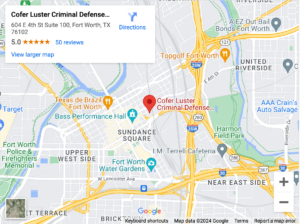
Cofer Luster Criminal Defense Lawyers
604 E 4th St Ste 101
Fort Worth, TX 76102