Cofer Luster Criminal Defense Lawyers | November 26, 2026 | DWI / DWI

Most DWI cases do not go to trial. Many are resolved through plea agreements, dismissals, or other outcomes before a jury hears the evidence. However, some cases proceed to trial when the defendant disputes the charges or prosecutors and defense attorneys cannot reach an agreement.
In Texas, adults accused of impaired driving are generally charged with driving while intoxicated (DWI), rather than driving under the influence (DUI). If you are facing DWI charges in Fort Worth, understanding how these cases are resolved can help you make informed decisions about your defense.
Why Most DWI Cases Never Reach Trial
Many DWI cases are resolved before trial because both sides reach an agreement or the prosecution decides not to proceed.
Common reasons include:
- Plea agreements: Defendants may agree to plead guilty or no contest in exchange for negotiated terms.
- Evidence problems: Weak or insufficient evidence may lead prosecutors to dismiss or reduce charges.
- Reduced uncertainty: A negotiated resolution can avoid the unpredictable outcome of a trial.
- Time and expense: Trials require significant preparation, court appearances, and resources.
However, accepting a plea agreement still carries consequences. A defendant should understand the potential penalties and long-term effects before making that decision.
Factors That May Lead a DWI Case to Trial
Some DWI cases proceed to trial because the defendant contests the allegations or the prosecution refuses to offer acceptable terms.
Factors that may influence this decision include:
- Disputed breath or blood alcohol test results
- Questions about the legality of the traffic stop or arrest
- Inconsistent police testimony or witness statements
- Disagreements about whether the defendant was intoxicated
- Prior convictions or enhanced charges that increase potential penalties
- The absence of an acceptable plea agreement
For example, a defendant may challenge whether the prosecution can prove intoxication at the time of driving. If significant factual disputes remain unresolved, a trial may be necessary.
What Happens During a DWI Trial?
If a DWI case goes to trial in Texas, prosecutors must present evidence proving the defendant’s guilt beyond a reasonable doubt. The defense has an opportunity to challenge that evidence and present its own case.
Although proceedings can vary, a DWI trial generally involves:
- Jury selection: Attorneys question potential jurors.
- Opening statements: Both sides outline their arguments.
- Presentation of evidence: Prosecutors introduce testimony, recordings, and test results.
- Defense: The defense challenges evidence and may present witnesses.
- Closing arguments and verdict: Both sides summarize their cases before a verdict is reached.
The prosecution must prove guilt beyond a reasonable doubt. An acquittal ends the case without a conviction, while a guilty verdict generally leads to sentencing.
Is It Better To Take a Plea Deal or Go to Trial for DWI?
Neither option is automatically better. The decision depends on the strength of the prosecution’s evidence, the available defenses, and the potential consequences of a conviction.
A plea agreement may offer a more predictable outcome, but it can still result in criminal penalties and a permanent record.
Going to trial allows the defendant to challenge the prosecution’s allegations and seek an acquittal. However, a conviction at trial may result in penalties that are more severe than those offered in a plea agreement.
An attorney can help you compare these possibilities before deciding how to proceed.
How Can a DWI Lawyer Help You Decide Whether To Go to Trial?
Deciding whether to accept a plea agreement or go to trial can have lasting consequences. A Fort Worth DWI lawyer can examine the strength of the prosecution’s case, identify possible weaknesses, and explain what you could face under either option.
Your attorney can help by:
- Reviewing evidence: Examining police reports, recordings, and chemical test results.
- Identifying defenses: Challenging unlawful stops, unreliable testing, or insufficient evidence.
- Evaluating plea offers: Comparing proposed terms with possible trial outcomes.
- Preparing for trial: Developing arguments, questioning witnesses, and presenting evidence.
Your lawyer can explain the potential consequences of each option so you can make an informed decision about your case.
Contact Cofer Luster Criminal Defense Lawyers To Discuss Your DWI Case With a Fort Worth DWI Defense Attorney
Facing impaired driving charges does not necessarily mean your case will go to trial. The available options depend on the evidence, the allegations, and the circumstances surrounding your arrest.
Cofer Luster Criminal Defense Lawyers represents clients facing DWI charges in Fort Worth and throughout Tarrant County. Our attorneys have extensive criminal trial experience and can evaluate your case, explain possible outcomes, and challenge the prosecution’s evidence.
Contact us today at (682) 777-3336 to schedule a confidential consultation with an experienced Fort Worth DWI defense lawyer.
We serve the surrounding areas of Tarrant County and Fort Worth, TX.
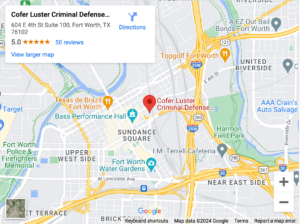
Cofer Luster Criminal Defense Lawyers
604 E 4th St Ste 101
Fort Worth, TX 76102